
Effective Home Remedies for a Sprained Ankle
Read MoreIt’s funny how something as simple as sleeping can turn into a nightly challenge when your knees or hips ache. You toss around, try every side of the bed, fold a pillow here, stretch a leg there, and somehow it still hurts. Sound familiar? You’re not alone.
Finding the right sleeping position gives you comfort and keeps your joints supported so you wake up feeling like a person, not a rusty hinge. Let’s understand from Dr Ankit Dave, one of the best knee replacement surgeons in Nairobi, about what actually helps and what doesn’t.
Why Sleeping Position Matters
When you lie down, gravity stops pulling your body downward like it does during the day. That sounds great, right? But it also means your joints rely more on how you position them. The wrong posture can twist your hips or press your knees together, adding more pain instead of relief.
The body loves alignment. If one joint is tilted or rotated too much, another part usually ends up doing extra work. That’s why side sleeping with no support between your legs often makes your knees or hips scream in the morning.
Side Sleepers, Take Note
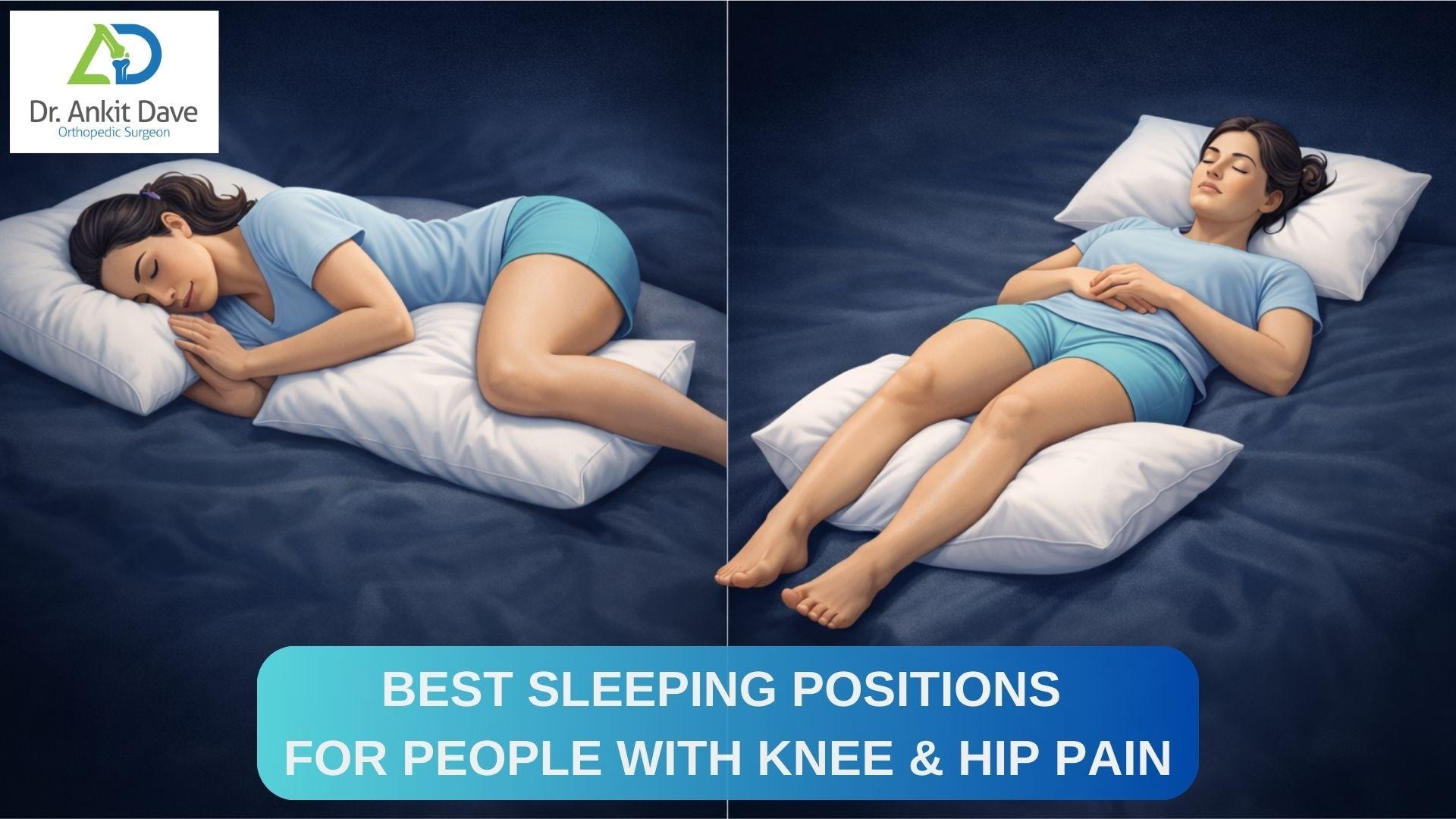
If you naturally fall asleep on your side, you’re halfway there. Most people with hip or knee pain find this position the easiest to tweak. The trick is to put a pillow between your knees. Not a giant cushion that lifts your leg into the air, just a medium-firm pillow that keeps your knees at hip level.
That small space prevents your top leg from collapsing forward and twisting your lower back. It also takes pressure off the outer hip. Some people like hugging another pillow against their chest too, which keeps the upper shoulder from rounding forward. One of the best hip replacement surgeons in Nairobi, Dr Ankit Dave, says that this seems silly until you try it and see how your whole body relaxes.
If you often wake up sore around one hip, try switching sides occasionally. Sleeping on the same side every night can irritate that joint even more.
Back Sleepers Aren’t Left Out
Sleeping on your back can actually be great for alignment, but only if you make a few small adjustments. Slide a pillow or rolled-up towel under your knees so they’re slightly bent. According to Dr Ankit Dave, who is well-known as one of the best orthopedic surgeons in Nairobi, this little lift reduces strain on your lower back and hips.
If your mattress is too firm, consider adding a soft topper. The idea is to let your hips sink just enough that your spine stays in a natural curve. You don’t want your back to feel like it’s lying on a wooden plank.
Some people also find placing a small pillow under thigh helps ease hip tightness. It’s worth experimenting a bit.
What About Stomach Sleepers?
Here’s the honest answer. Sleeping on your stomach is tough on joints. Your neck twists, your hips sink, and your knees get zero support. If you’ve got hip or knee pain, this position can make mornings rough.
But if that’s the only way you can fall asleep, don’t panic. Try putting a thin pillow under your pelvis. It’ll help keep your hips more neutral and take pressure off the lower back. You can also bend one leg slightly and rest it on a pillow. Small changes can make a surprisingly big difference.
Don’t Ignore Your Mattress and Pillows
Even the best sleeping position can fail if your bed doesn’t cooperate. A saggy mattress that dips in the middle will undo all your careful alignment. Ideally, your mattress should support your natural curves without swallowing you.
Memory foam and hybrid mattresses tend to do well here. If your mattress is in good shape but still too firm, a pressure-relieving topper might help. Pillows matter too. If your head pillow is too thick or too flat, your spine will be off balance before your body even has a chance to rest.
And please, wash or replace old pillows. They lose shape faster than most people think.
Small Habits That Help
Before you lie down, stretch your hips and legs gently. Nothing complicated, just a few slow movements to release stiffness. Ice or heat can also help calm sore joints before bed. And if you wake up stiff, don’t jump out of bed right away. Roll to your side first, use your arms to push up, and then stand. It’s easier on your joints than that classic sit-up motion.
The Bottom Line
Some of the best knee replacement surgeons in Nairobi will tell you that there’s no single “perfect” sleeping position for everyone with knee or hip pain. Bodies are weird and personal. What feels amazing to one person might feel awkward to another.
The goal is to keep your spine, hips, and knees in a comfortable line so no single joint carries all the load. Pillows are your best friend here. Think of them as gentle props rather than decorations.
And if pain keeps you up night after night, talk to a physical therapist or doctor. Sometimes, it’s not just the sleeping position but an underlying issue that needs attention.
Sleep shouldn’t hurt. A few mindful adjustments can turn those restless nights into something closer to restful. And who doesn’t want to wake up feeling a little less creaky.