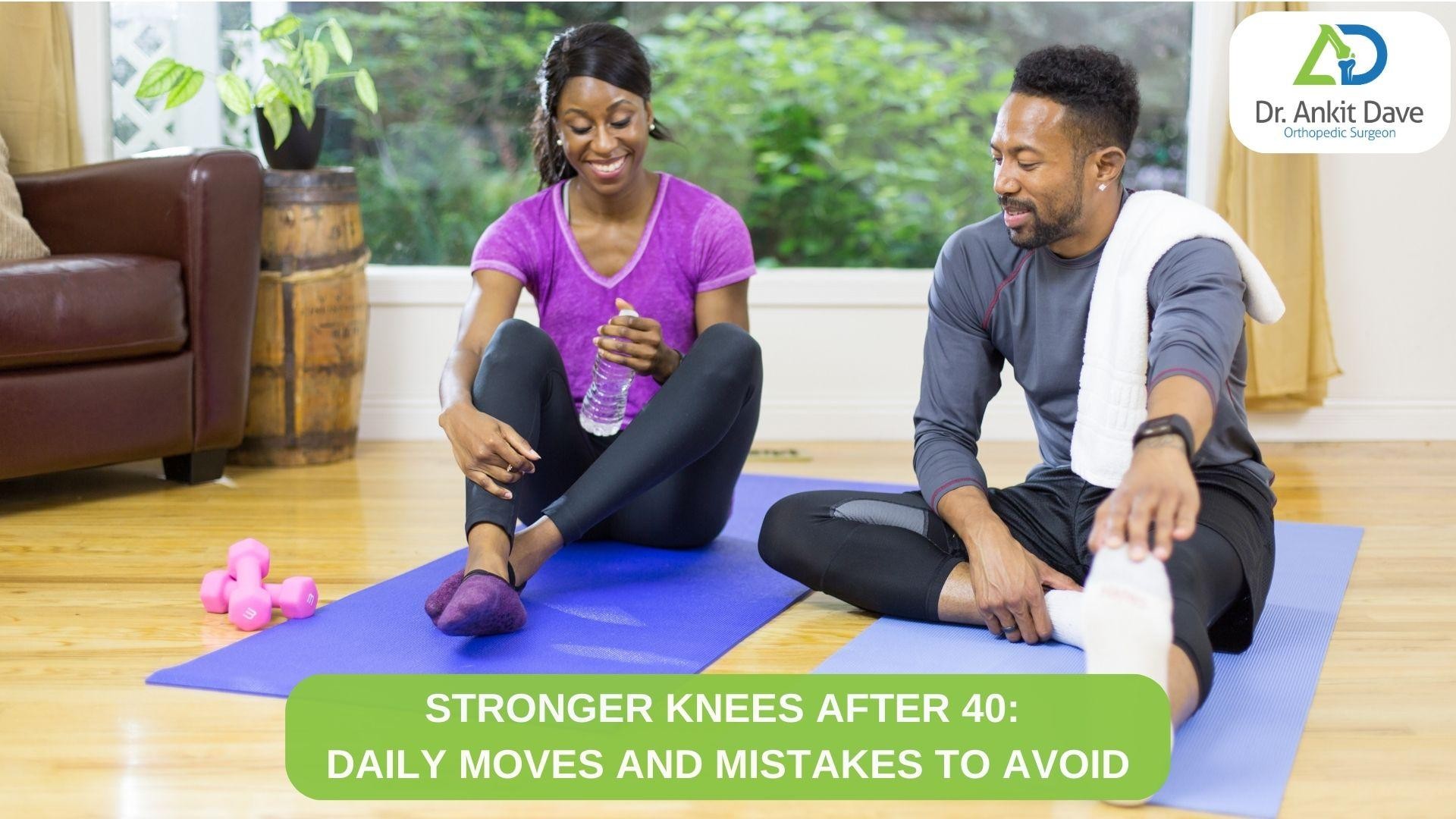
Stronger Knees After 40: Daily Moves and Mistakes to Avoid
Read More
If you’ve played football on a rainy Sunday or gone for a “quick” run that somehow turned into a mini marathon, you’ve probably felt that sharp sting in your knee or the dull pull in your calf the next morning. Patients with sports injuries are very common, says DrAnkit Dave, one of the best orthopaedic surgeons in Nairobi and footballers and runners share a lot of the same problems. The constant pounding, twisting, and sudden bursts of movement can push the body to its limits. And when that line gets crossed, pain usually follows.
So, let’s talk about the most common injuries you might face, what they actually feel like, and how you can keep them at bay.
1. The Classic: Sprained Ankles
If you’ve ever rolled your ankle mid-game, you know that mix of pain and frustration. One second you’re sprinting after the ball, the next you’re on the ground wondering how something so small can hurt so much. A sprain happens when the ligaments around your ankle stretch too far or tear.
Most mild sprains heal on their own with rest, ice, compression, and elevation. But repeated ones? That’s a warning sign. Weak ankles are more likely to twist again, so once you’re back on your feet, strengthening exercises like calf raises and balance drills are worth their weight in gold.
2. Runner’s Knee (Patellofemoral Pain Syndrome)
That dull ache behind or around the kneecap is often what people call runner’s knee. It’s one of the most annoying injuries because it creeps in slowly. You don’t really notice it until climbing stairs or getting up from a chair starts to hurt.
Dr Ankit Dave, considered as one of the best doctors for sports injury in Nairobi, mentions that the cause can be anything from weak thigh muscles to overtraining. The solution usually involves strengthening your quads and glutes, mixing in low-impact workouts, and making sure your shoes haven’t lost their cushioning. A proper warm-up before every run also makes a world of difference.
3. Hamstring Strains
Few things are as frustrating as feeling that sudden tug in the back of your thigh mid-sprint. Hamstring injuries happen when your muscles stretch beyond what they’re ready for, often during explosive movements.
Footballers deal with this one a lot because of all the quick starts and stops. Runners aren’t safe either, especially if they skip stretching. Preventing hamstring strains is all about balance. You need flexibility but also strength. Warm up properly before intense sessions, and don’t go from zero to hero after a long break.
4. Shin Splints
If you’ve ever started a new running program or switched to harder ground, you’ve probably felt this one. That aching, burning pain along the front of your shins can make every step miserable.
Shin splints are usually caused by overuse or bad running form. Maybe your shoes aren’t giving enough support, or you’ve pushed mileage too fast. Prevention tip? Increase your training gradually, invest in shoes suited to your running style, and give your legs time to rest. A little ice after long runs doesn’t hurt either.
5. Groin Pulls
Footballers, especially those who play on uneven fields, know this one too well. That sudden inner-thigh pain when you stretch for the ball or twist sharply? Classic groin pull.
The groin muscles are involved in nearly every movement on the field, from kicking to turning. They’re easy to strain if they’re not properly warmed up. Being among one of the most trusted doctors for sports injury in Nairobi, Dr Ankit Dave, recommends gentle stretching before play and strengthening exercises like side lunges to keep them flexible and strong.
6. Plantar Fasciitis
This one tends to sneak up on both runners and footballers. It starts as a stabbing pain in your heel, usually worst in the morning. It’s inflammation of the thick tissue under your foot, often caused by overtraining, poor footwear, or tight calves.
Stretching your calves and arches before running helps a lot. So is wearing shoes with proper arch support.
7. IT Band Syndrome
The iliotibial band runs along the outside of your thigh, connecting your hip to your knee. When it gets tight, it rubs against the knee bone and causes pain that can feel sharp or burning. Runners often get this after upping their mileage too fast.
Foam rolling, hip stretches, and cross-training can help. Sometimes, even changing your running route to include fewer slopes can make a difference.
Staying Injury-Free
You’ve probably noticed a pattern by now: most injuries come from pushing too hard, too soon, or skipping the boring stuff like warming up and cooling down. The truth is, prevention is easy. It just takes some discipline.
Listen to your body. Rest when something feels off. And please, don’t let “no pain, no gain” fool you. Pain is usually your body’s way of saying, “Slow down.” Don’t hesitate to seek help from the best orthopaedic surgeons in Nairobi, in which case.
Football and running can keep you fit, focused, and ridiculously happy, but only if your body stays in one piece.