When to See an Orthopedic Surgeon for Arthroscopic Surgery in Nairobi
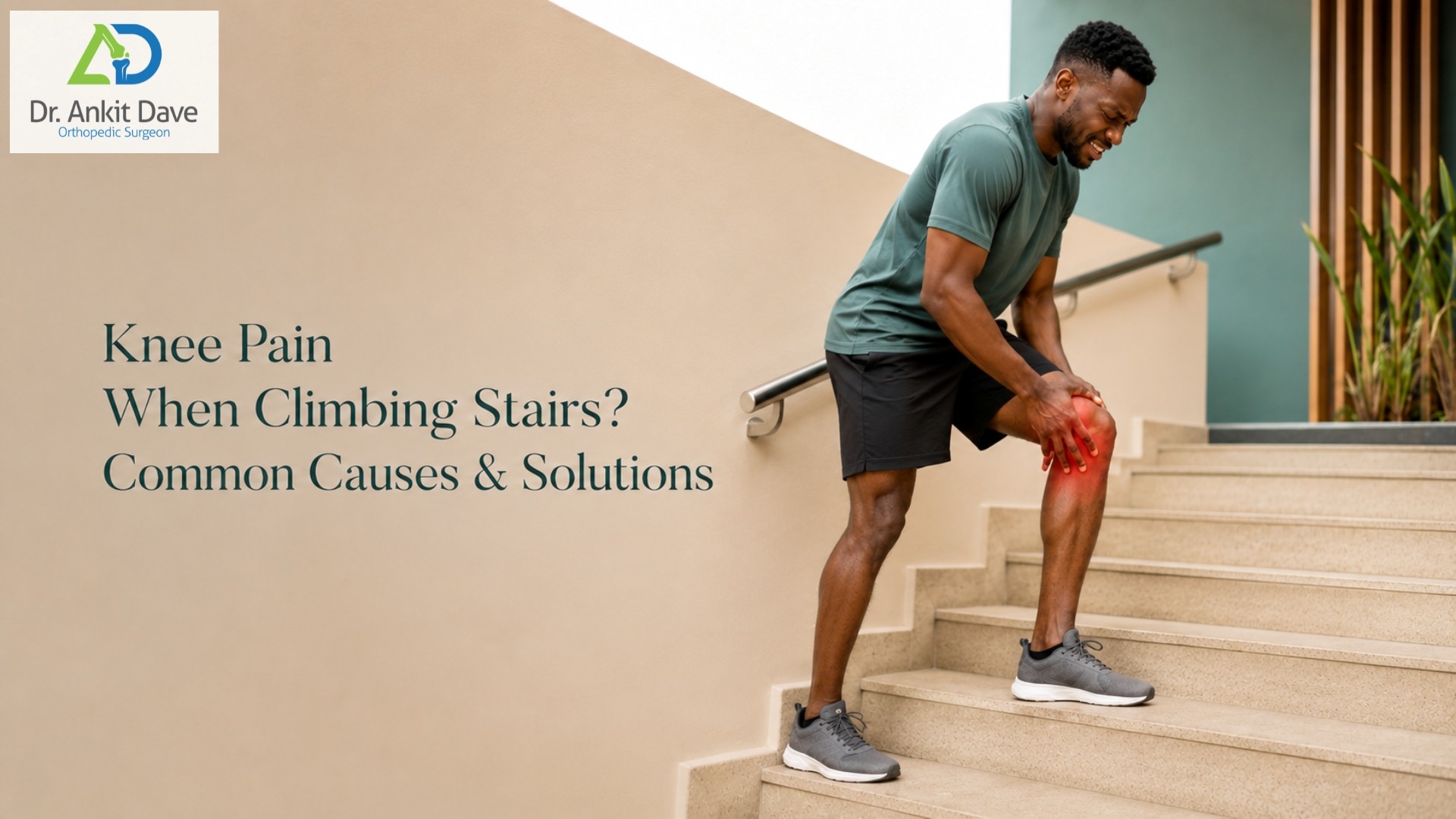
Read MoreThere’s something oddly humbling about walking up a flight of stairs and feeling a sharp pinch in your knee. One moment you’re breezing through your day, and then suddenly your knee decides to protest like it’s carrying the weight of the planet. It catches you off guard. You pause for a second and think, Is this normal or am I falling apart already? Knee pain on stairs is more common than people admit. It happens in younger folks too, not just older adults. You might feel a dull ache going up, a sharper sting coming down, or a weird grinding sensation that makes you wince. All of these are clues your knee is trying to send you. Let’s understand it in detail from one of the best knee replacement surgeons in Nairobi, Dr Ankit Dave.
Why Stairs Make Your Knee Pain Worse?
Climbing stairs puts more pressure on your knee joint than walking on flat ground. Gravity is working against you, and your bodyweight shifts in a way that makes the knee take on extra load. If something inside the joint is irritated, weak, or a bit worn out, stairs expose it instantly. You feel it with every step.
Some people first notice the pain when they skip a step, twist slightly, or climb stairs after sitting for a long time. That stiff, creaky feeling can make the first step feel awful. Once you warm up, the pain might ease, which can be confusing. You start thinking it’s gone until the next flight of stairs hits you again.
Patellofemoral Pain: The Usual Suspect
According to Dr Ankit Dave, who is well-known as the best orthopaedic surgeons in Nairobi, one of the most common reasons for stair related knee pain is patellofemoral pain syndrome. It sounds complicated, but it basically means the front of your knee is irritated. When the kneecap doesn’t glide smoothly in its groove, it rubs a little too much. Stairs amplify that friction. That’s where the dull ache or burning feeling comes in.
A quick way to spot it is to sit for a while and then stand up. If your knee complains in the first few seconds, that’s a sign. Some people even feel a small pop that feels like pressure being released. That part is normal, although it can be startling if you weren’t expecting it.
Do Weak Leg Muscles Can Create Strong Knee Pain?
A surprising number of knee problems start somewhere else. If your quadriceps are weak, your knee loses support. If your glutes are asleep half the time, your legs compensate in weird ways. The knee ends up doing more work than it should. This is especially true when climbing stairs, since the movement depends on the thigh and hip muscles.
Next time you’re going upstairs, notice your form. Are you leaning forward too much? Does one leg feel stronger while the other hesitates? This unevenness shows up long before pain becomes serious.
Arthritis Isn’t Always Dramatic
People hear the word arthritis and imagine severe, crippling pain. The early stages are often much quieter. Slight swelling, a little warmth around the joint, or a feeling like the knee is heavier than usual can all be early signs. Stairs highlight these symptoms because your joint surfaces press against each other more firmly.
Some of the best hip replacement surgeons in Nairobi share the opinion that arthritis, especially osteoarthritis, is not just an age thing. It can happen early if you’ve had injuries, repetitive strain, or a long history of high impact sports. It moves slowly, so people ignore it until it becomes too obvious.
Meniscus Trouble Causing You A Knee Pain: The Sharp, Catching Pain
If your knee pain feels sharp, and especially if it catches or locks for a second, the meniscus might be involved. That’s the cartilage that cushions your knee. When it’s torn or worn down, stairs can trigger a very specific pinch that stops you mid step. You may feel fine on flat ground but stairs bring out the worst of it.
So What Do You Do About Your Knee Pain?
The good news is that most knee pain improves with the right habits. You don’t need to overhaul your life. Small, consistent changes go a long way.
Start with gentle strengthening. Focus on the quadriceps, glutes, and hamstrings. Even simple exercises like wall sits, leg raises, or step ups can build stability. Do them slowly. Rushing through reps does nothing.
Stretching matters too. Tight calves and thighs pull on the knee in ways you’d never guess. A few minutes of stretching each day can change your stair experience completely.
Ice works well if your knee feels inflamed after walking or climbing. Heat helps if the joint feels stiff. It’s trial and error. Your body tells you which one it prefers.
Supportive shoes make a bigger difference than most people realize. If your shoes tilt your feet inward or outward, your knees get dragged along for the ride.
And if the pain feels sharp, sudden, or keeps coming back no matter what you try, see a professional, someone like Dr Ankit Dave, one of the best knee replacement surgeons in Nairobi. You don’t have to wait until it becomes unbearable. Early help saves you a lot of frustration.
Knee pain isn’t a sign of weakness. It’s feedback. Stairs just happen to be very honest. If your knee speaks up, pay attention and adjust. Your future self will thank you for it.