ACL Tear: Surgery or Physiotherapy? How to Choose the Right Treatment
Read MoreOne awkward landing. A sharp twist. Maybe a popping sound that makes your stomach drop. Sports injuries rarely announce themselves politely. One second you are sprinting, pivoting, or jumping. Next, you are on the ground wondering if you can even stand up without help.
In a city like Nairobi, where weekend football matches, running clubs, gym sessions, and pickup basketball games are part of everyday life, these injuries are common. What is tricky is knowing whether it is something minor that will settle in a few days or something that needs a specialist right away. Let’s understand from Dr Ankit Dave, one of the best doctors for sports injury in Nairobi, the difference between letting the injury heal at home and consulting a doctor.
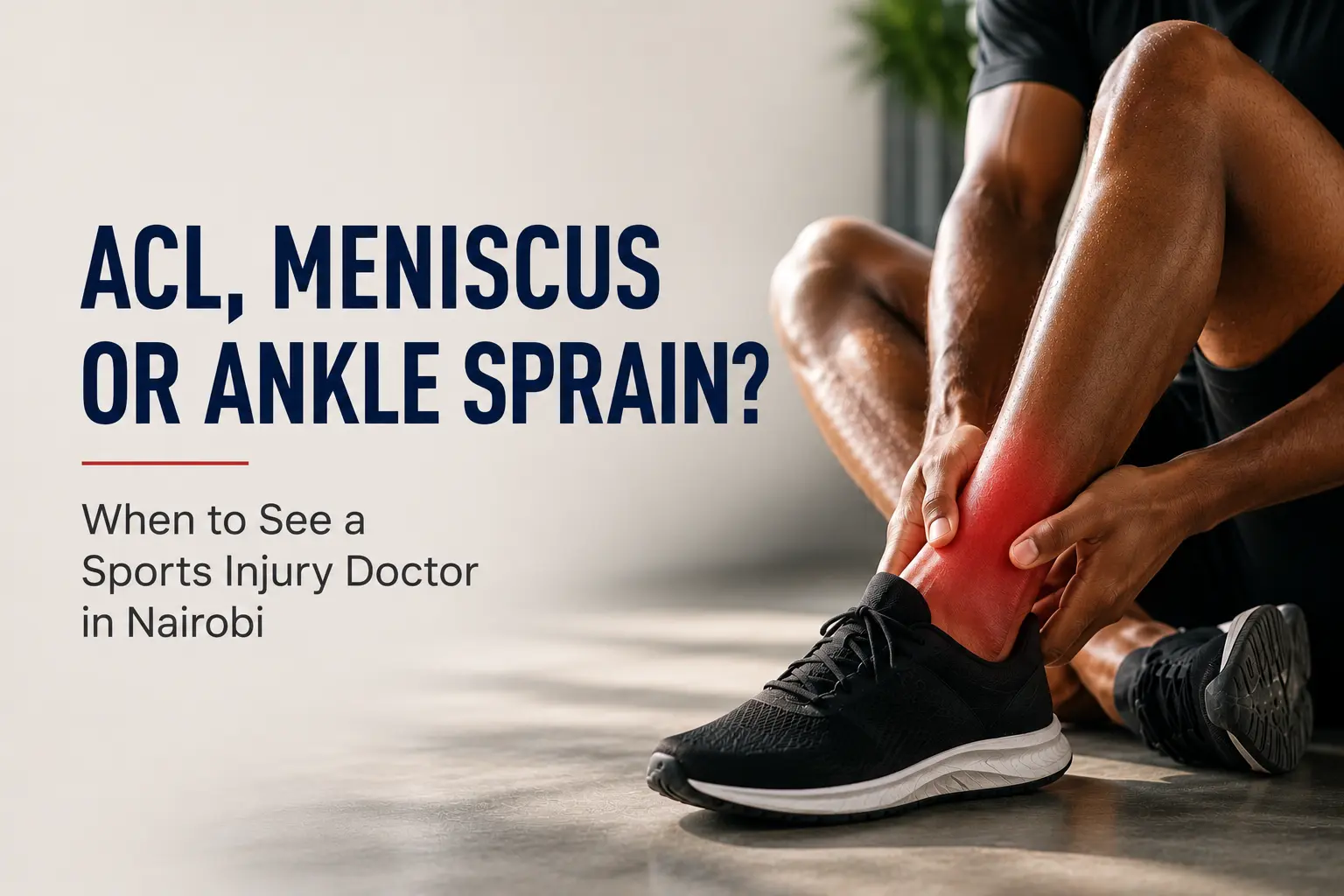
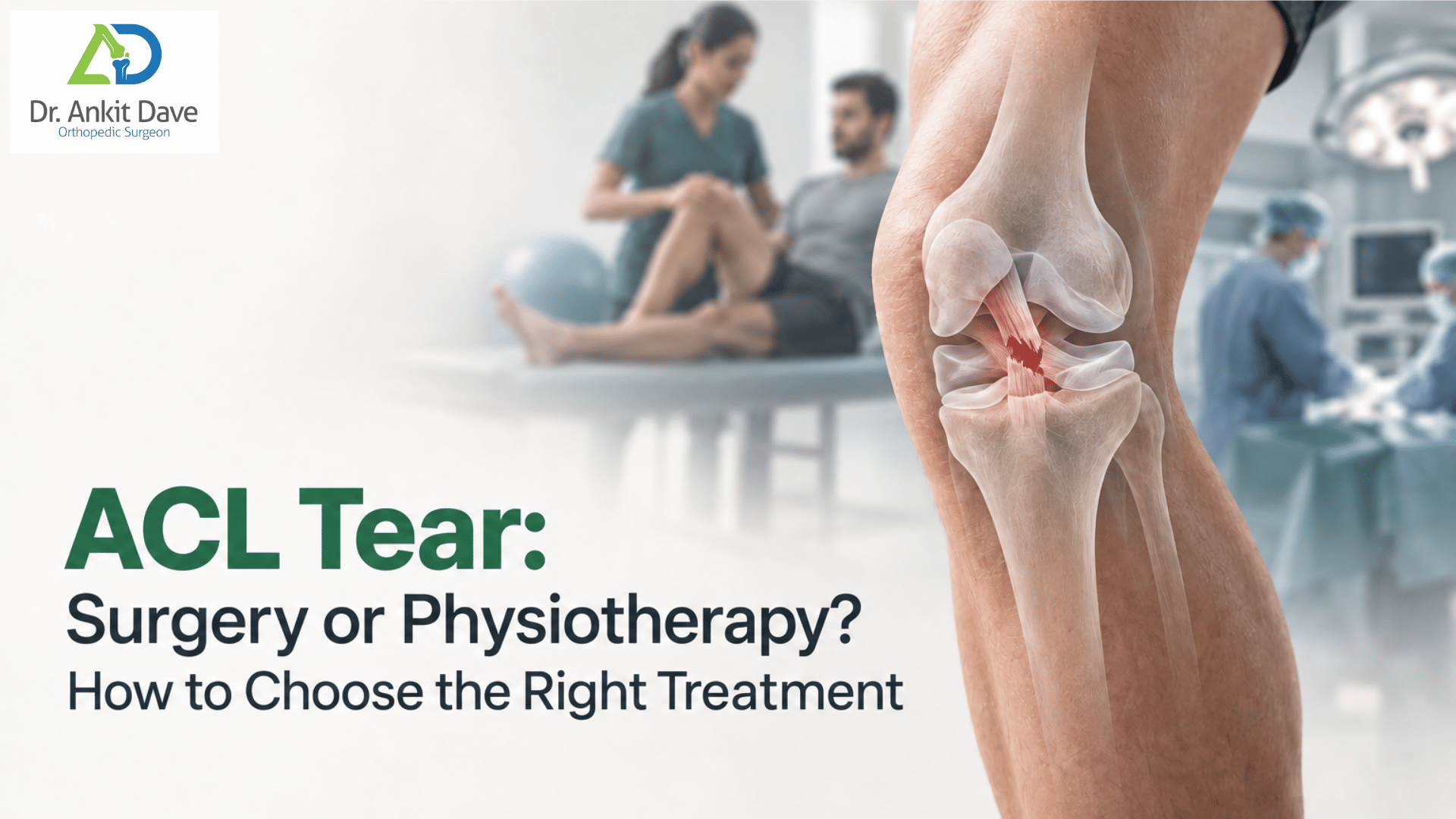
When It Might Be an ACL Injury
ACL injuries have a reputation for a reason. They are dramatic. Many people describe hearing or feeling a distinct “pop” inside the knee, followed by immediate instability. It is not just pain. The knee suddenly feels unreliable, like it might give way if you try to put weight on it.
Swelling often appears within hours. Sometimes the joint becomes so stiff you cannot fully bend or straighten your leg. Walking feels awkward, almost mechanical.
If you cannot trust your knee to support you, that is not something to ignore. Especially if you are active or play sports regularly. An untreated ACL tear can lead to further damage over time, including to the meniscus or cartilage.
Signs of a Meniscus Tear
Meniscus injuries are sneakier. You might not collapse on the field. In fact, you might even finish the game and only realize something is wrong later that evening when the knee starts tightening up.
Common clues include:
- A catching or locking sensation in the knee
- Pain when twisting or squatting
- Swelling that builds slowly rather than instantly
- Difficulty fully straightening the leg
Some people describe it as feeling like something is stuck inside the joint. It is not exactly painful all the time, it is just wrong.
The best orthopaedic surgeons in Nairobi say that meniscus tears are common in both athletes and non-athletes. Even stepping off a curb awkwardly can do it. If the knee keeps swelling after activity or repeatedly feels like it might jam, a proper evaluation is worth it.
Ankle Sprain or Something More?
Ankle injuries are so common that many people brush them off. You roll your ankle, limp for a few days, maybe wrap it, then get back to life. Sometimes that works. Sometimes it does not.
A mild sprain improves steadily. Each day gets a little easier. Severe sprains are more serious.
Watch for these warning signs:
- Severe swelling or bruising spreading across the foot
- Inability to bear weight after the first day or two
- Persistent instability, like the ankle might buckle
- Pain that does not improve after a week
If your ankle still feels wobbly weeks later, the ligaments may not have healed properly. Repeated sprains can follow, turning a one-time injury into a long-term problem.
Pain Is Not the Only Signal
People often wait until pain becomes unbearable before seeing a doctor. That is not always smart. Loss of function matters just as much.
Ask yourself:
- Can you move the joint normally?
- Does it feel stable when you stand or walk?
- Is swelling going down or staying the same?
- Are daily activities becoming easier or harder?
If progress has stalled or reversed, your body is telling you something, and it’s time to consult the best doctor for sports injury in Nairobi, like Dr Ankit Dave.
Also, night pain or discomfort at rest can be a warning sign. Injuries that keep you awake tend to be more serious than simple muscle soreness.
Why Seeing the Right Specialist Matters
Not all doctors approach sports injuries the same way. A general clinic might focus on pain relief, which is helpful but not always enough. A sports injury specialist looks at function, recovery timelines, and long-term joint health.
Many people want to return quickly to work, commuting, or training, this difference matters. Proper diagnosis by the best orthopaedic surgeon in Nairobi may involve imaging, stability tests, and a clear rehab plan rather than just rest and painkillers.
Early treatment can mean the difference between a full recovery and months of frustration.
Trust Your Instincts (They Are Usually Right)
Most people know when something is not normal. Maybe the swelling looks excessive. Maybe the joint feels loose in a way you have never experienced before. Or maybe the pain is sharp and deep rather than dull and sore.
If you are hesitating because you do not want to make a fuss, consider the alternative. Getting checked does not commit you to surgery or complicated treatment. It simply gives you information.
And honestly, peace of mind is underrated.
A minor injury will heal. A serious one will not magically disappear because you decided to tough it out. When in doubt, seeing one of the best doctors for sports injury in Nairobi is not overreacting. It is common sense.