
ACL Tear: Surgery or Physiotherapy? How to Choose the Right Treatment
Read MoreAvascular necrosis (AVN) of the hip can be easy to miss in its early stages. It often begins with mild, on-and-off groin pain that does not seem serious enough to investigate. That delay matters, because by the time many patients finally see an orthopedic specialist, the affected bone may already have started to collapse.
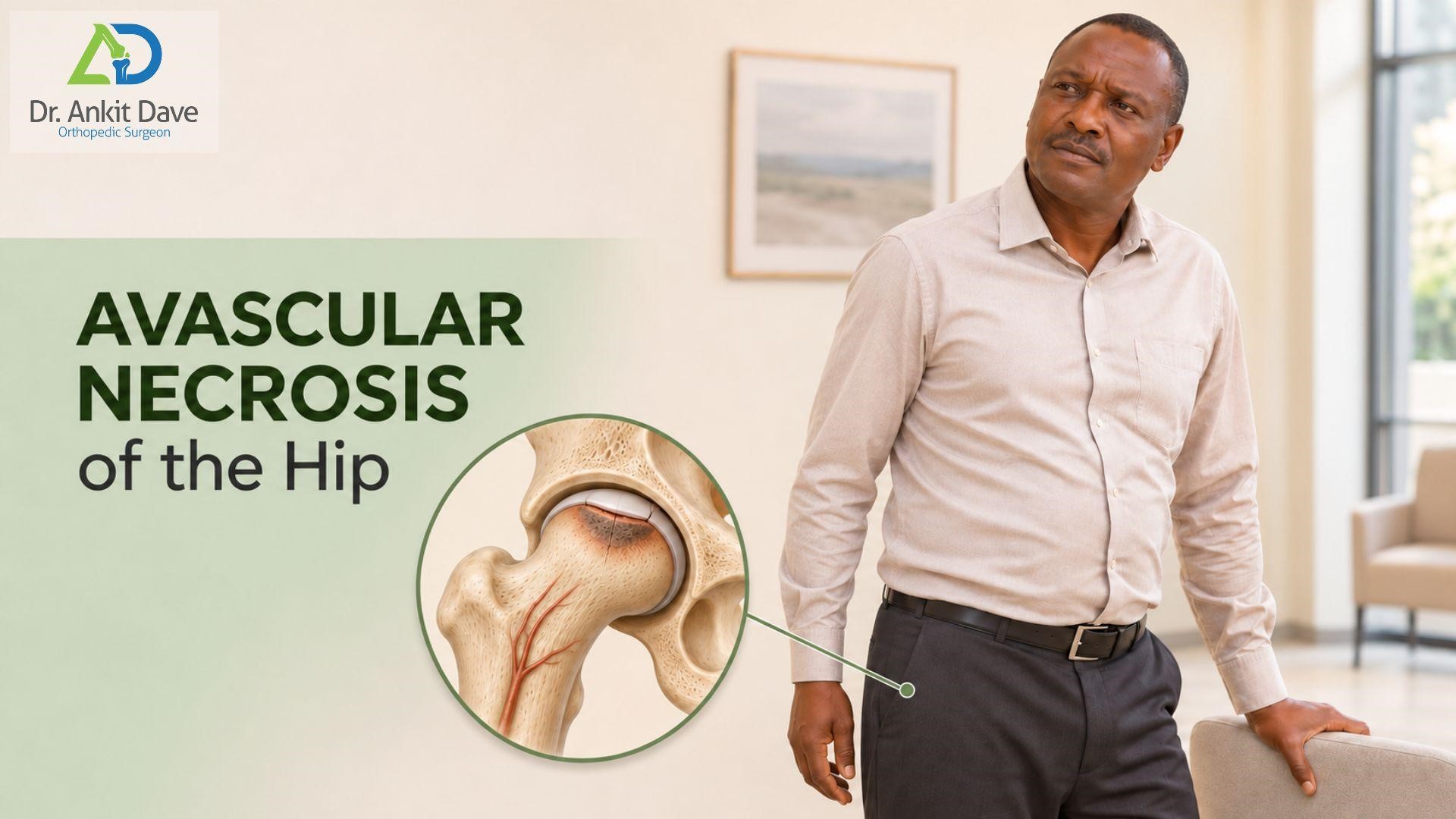
What’s happening inside the joint in Avascular Necrosis?
Avascular necrosis, or osteonecrosis, begins when part of the femoral head stops getting enough blood. If the blood flow stays reduced, that part of the bone slowly weakens. Early on, the damage may not be obvious, but over time the femoral head can lose its shape and begin to collapse.
The tricky part is that the joint surface may still look fairly normal in the early stages. That is why a standard X-ray can miss early disease, and an MRI is often needed when symptoms suggest AVN but the X-ray does not show much.
What Causes Avascular Necrosis?
The most commonly recognised causes include long-term or high-dose corticosteroid use, heavy alcohol consumption, and previous hip trauma or dislocation that disrupted the local blood vessels. Certain conditions such as sickle cell disease and blood clotting disorders also raise the risk.
In a significant number of cases, no clear cause is ever found. That can be frustrating, but it does not usually change the treatment plan. It is worth knowing this early, so patients do not spend months looking for an explanation that may simply not be identifiable.
Why Early Diagnosis matters in Avascular Necrosis?
Avascular necrosis is staged according to how much damage has occurred in the femoral head. In the early stages, changes may be visible only on MRI while the joint surface is still intact. As the condition progresses, the bone can weaken, collapse and eventually damage the joint surface.
This staging matters because it directly affects which treatments are still likely to work.
- Before collapse: treatment may include reducing weight-bearing, medication in selected cases, and procedures such as core decompression. Core decompression involves creating small channels in the femoral head to reduce pressure and encourage new blood supply to the affected area.
- After collapse: once the shape of the femoral head and joint surface has been lost, joint-preserving procedures become much less predictable. Hip replacement is often the more reliable option at this stage.
That is why persistent hip or groin pain should not simply be watched for months, especially when symptoms are not settling with rest. An orthopedic surgeon in Nairobi who regularly treats AVN may recommend an MRI even if the initial X-ray looks normal, because early bone changes can appear on MRI before they become visible on plain X-rays.
When Hip Replacement becomes the Right Call iNn Avascular Necrosis cases?
Once the femoral head has started to collapse, or pain and stiffness are interfering with everyday activity, joint-preserving procedures are less likely to provide a lasting result. At that stage, the decision is based not only on how much pain the patient is in, but also on what the imaging shows, especially the extent of collapse and how much of the joint surface is still preserved.
For patients who have reached this stage, total hip replacement can offer reliable pain relief and restore function. This can also be a good option for younger patients when the implant and surgical approach are chosen with their age, activity level and long-term needs in mind.
Is Avascular Necrosis confined to the Hip?
Avascular necrosis can affect other joints too, most commonly the knee, particularly in patients whose AVN is linked to steroid use or sickle cell disease rather than trauma.
If knee pain develops alongside your hip symptoms, it is worth having both joints looked at together rather than assuming they are unrelated. In this situation, seeing a knee replacement surgeon in Nairobi who also treats hip conditions can be useful, because the source of the pain can be assessed in one consultation.
If groin pain has persisted for more than a few weeks, especially with a history of steroid use, heavy alcohol intake, or previous hip injury, it’s worth having it imaged properly rather than assuming it’s routine muscular strain.
If you’re already carrying an MRI or X-ray report mentioning avascular necrosis, bring it to your first consultation. The stage seen on imaging often matters more than the pain score alone, because it helps show whether joint-preserving treatment is still an option or whether hip replacement is likely to give a more reliable long-term result.
Frequently Asked Questions
Can avascular necrosis of the hip heal on its own?
No. Once blood supply to the bone is disrupted, the affected bone tissue doesn’t regenerate on its own. The treatment depends largely on how far AVN has progressed. If the femoral head is still intact, the focus is on trying to preserve the joint. Once collapse has occurred, hip replacement is often the more reliable option.
Does avascular necrosis always require hip replacement?
Not always. Cases caught before the femoral head collapses can sometimes be managed with core decompression or other joint-preserving procedures. Once collapse has occurred, replacement is usually the more reliable option.
What are the early symptoms of avascular necrosis of the hip?
Groin pain that worsens with weight-bearing and improves with rest is common early on. It can be intermittent at first, which is part of why it’s often mistaken for a muscular strain.
Is avascular necrosis linked to steroid use always avoidable?
Not entirely. It’s a recognised risk with long-term or high-dose steroid use, but not everyone on steroids develops it, and the exact individual risk isn’t fully predictable.
Can avascular necrosis affect both hips at once?
Yes, AVN can affect both hips. One side may be more advanced than the other, especially when the condition is linked to something that affects the whole body, such as long-term steroid use or sickle cell disease.